
If Trump Wins, His Allies Want Lawyers Who Will Bless a More Radical Agenda


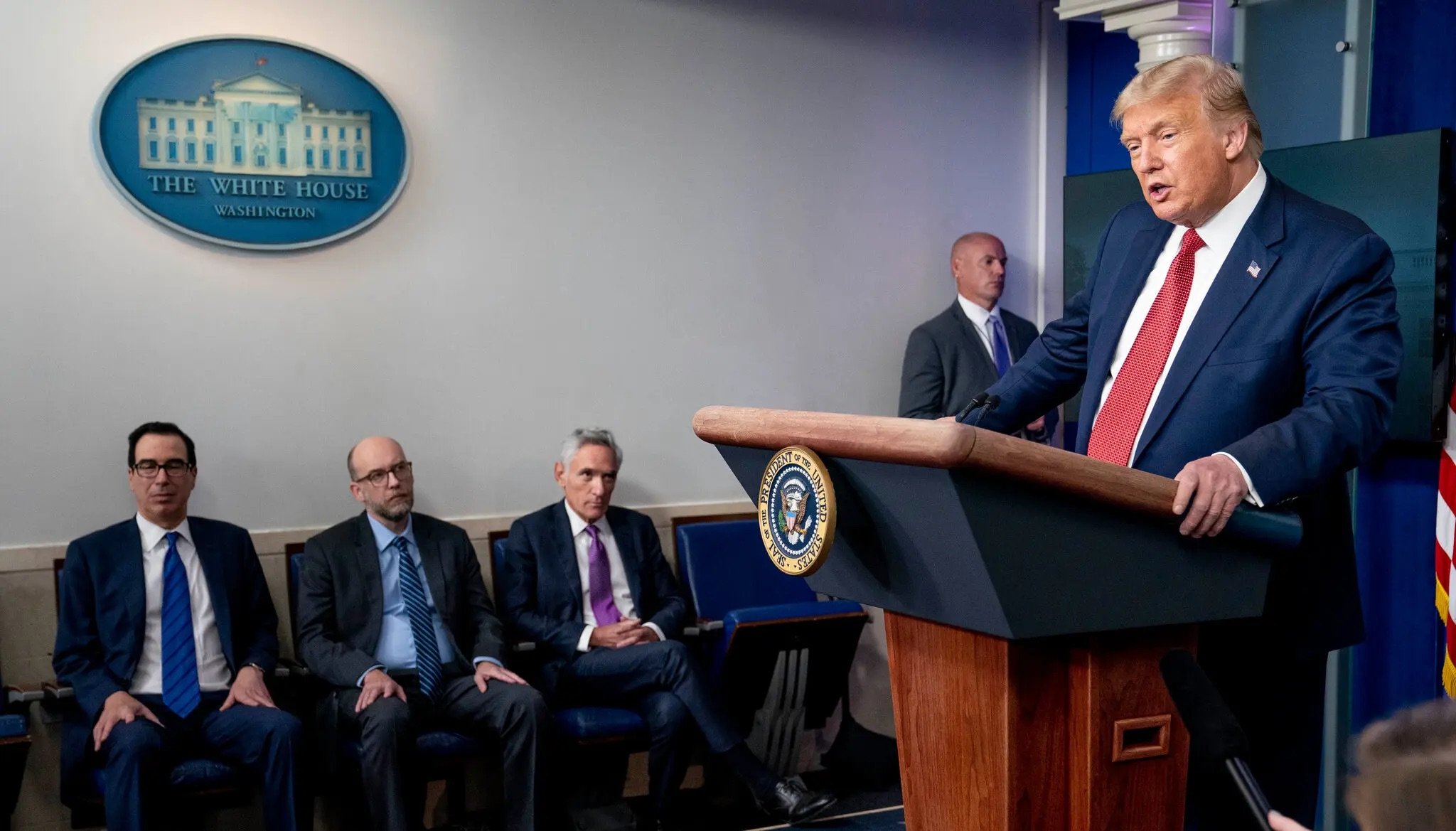
Top Trump allies, including Russell Vought, seated in the middle, have come to view the Republican Party’s legal elites — even leaders with impeccable conservative credentials — as out of step.Credit...Andrew Harnik/Associated Press
Politically appointed lawyers sometimes frustrated Donald J. Trump’s ambitions. His allies are planning to install more aggressive legal gatekeepers if he regains the White House.
by Jonathan Swan, Charlie Savage and Maggie Haberman
Close allies of Donald J. Trump are preparing to populate a new administration with a more aggressive breed of right-wing lawyer, dispensing with traditional conservatives who they believe stymied his agenda in his first term.
The allies have been drawing up lists of lawyers they view as ideologically and temperamentally suited to serve in a second Trump administration. Their aim is to reduce the chances that politically appointed lawyers would frustrate a more radical White House agenda — as they sometimes did when Mr. Trump was in office, by raising objections to his desires for certain harsher immigration policies or for greater personal control over the Justice Department, among others.
Now, as Trump allies grow more confident in an election victory next fall, several outside groups, staffed by former Trump officials who are expected to serve in senior roles if he wins, have begun parallel personnel efforts. At the start of Mr. Trump’s term, his administration relied on the influential Federalist Society, the conservative legal network whose members filled key executive branch legal roles and whose leader helped select his judicial nominations. But in a striking shift, Trump allies are building new recruiting pipelines separate from the Federalist Society.
These back-room discussions were described by seven people with knowledge of the planning, most of whom spoke on the condition of anonymity to describe private conversations. In addition, The New York Times interviewed former senior lawyers in the Trump administration and other allies who have remained close to the former president and are likely to serve in a second term.
The interviews reveal a significant break within the conservative movement. Top Trump allies have come to view their party’s legal elites — even leaders with seemingly impeccable conservative credentials — as out of step with their movement.
“The Federalist Society doesn’t know what time it is,” said Russell T. Vought, a former senior Trump administration official who runs a think tank with close ties to the former president. He argued that many elite conservative lawyers had proved to be too timid when, in his view, the survival of the nation is at stake.
Such comments may surprise those who view the Federalist Society as hard-line conservatives. But the move away from the group reflects the continuing evolution of the Republican Party in the Trump era and an effort among those now in his inner circle to prepare to take control of the government in a way unseen in modern presidential history.
Two of the allies leading the push are Stephen Miller, Mr. Trump’s former senior adviser, and John McEntee, another trusted aide whom the then-president had empowered in 2020 to rid his administration of political appointees perceived as disloyal or obstructive.
The nonprofit groups they are involved in are barred by law from supporting a candidate, and none of the work they are doing is explicitly tied to Mr. Trump. But Mr. Miller and Mr. McEntee remain close to the former president and are expected to have his ear in any second term.
Mr. Trump himself, focused for now on multiple criminal and civil cases against him, appears disengaged from these efforts. But he made clear throughout his term in office that he was infuriated by many of the lawyers who worked for him, ranting about how they were “weak” and “stupid.”
By the end of his term, lawyers he appointed early in his administration had angered the White House by raising legal concerns about various policy proposals. But Mr. Trump reserved his deepest rage for the White House and Justice Department legal officials who largely rejected his attempts to overturn the 2020 election, according to people who spoke with him. Casting about for alternative lawyers who would tell him what he wanted to hear, Mr. Trump turned for that effort to a group of outside lawyers, many of whom have since been indicted in Georgia.
People close to the former president say they are seeking out a different type of lawyer committed to his “America First” ideology and willing to endure the personal and professional risks of association with Mr. Trump. They want lawyers in federal agencies and in the White House who are willing to use theories that more establishment lawyers would reject to advance his cause. This new mind-set matches Mr. Trump’s declaration that he is waging a “final battle” against demonic “enemies” populating a “deep state” within the government that is bent on destroying America.
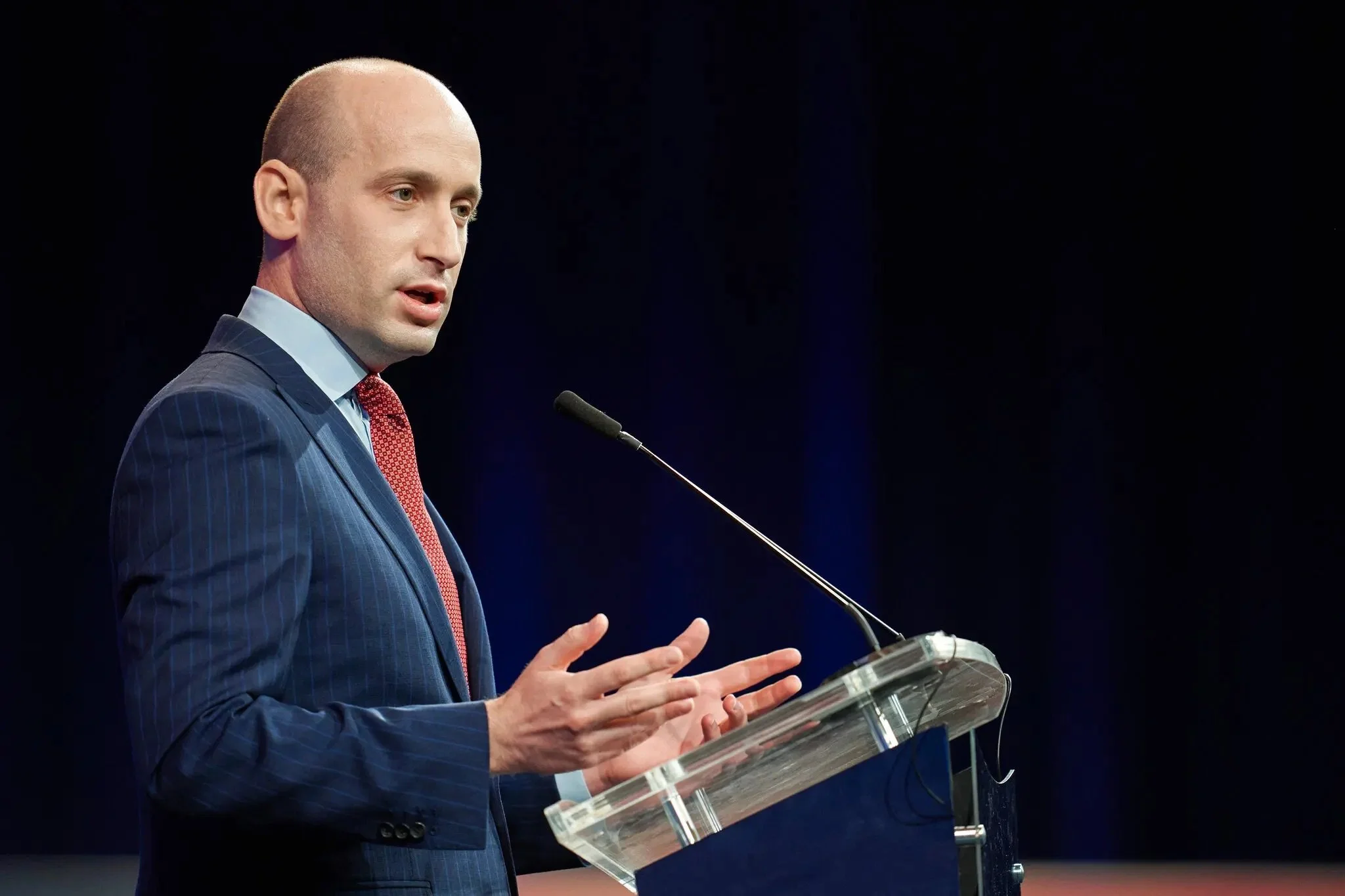
Several of Mr. Trump’s key allies — including Stephen Miller, his former senior adviser — are drawing up lists of lawyers they plan to hire if the former president returns to the White House in 2025.Credit...Cooper Neill for The New York Times
There were a few lawyers like that in Mr. Trump’s administration, but they were largely outnumbered, outranked and often blocked by more traditional legal conservatives. For those who went to work for Mr. Trump but grew disillusioned, the push to systematically install Trump loyalists who may see the law as malleable across a second Trump administration has been a cause for alarm.
Inside Trump’s 2025 Plans
Here’s how the former president and his allies are planning to wield power in a second term.
If he wins another term, Donald Trump said that he’d “go after” President Biden, hinting at a radical strategy to erode the post-Watergate norm of Justice Department independence.
Trump and his backers aren’t looking just to revamp the Justice Department. They also want to increase presidential power over other federal agencies.
The Biden administration is trying to Trump-proof the federal work force, hoping to thwart the former president’s plan to fire civil service workers if he gets back in the White House.
The Republican push to use military force in Mexico against drug cartels started in the Trump White House. He wants to make the idea a reality if he returns to the Oval Office.
John Mitnick was appointed by Mr. Trump as general counsel of the Homeland Security Department in 2018. But he was fired in 2019 as part of a broad purge of the agency’s leaders — whom Mr. Trump had installed — and was replaced by one of Mr. Miller’s allies.
Mr. Mitnick predicted that “no qualified attorneys with integrity will have any desire to serve as political appointees” in a second Trump term, and that instead it would be “predominantly staffed by opportunists who will rubber-stamp whatever Trump and his senior White House staff want to do.”
In many ways, the Federalist Society has become synonymous with the Republican establishment, and its members’ most common interests — including pushing an originalist interpretation of the Constitution and federal statutes — can be distinct from the whims and grievances of Mr. Trump himself. Its membership dues are low, and politically ambitious Republican lawyers of various stripes routinely join it or attend its events. Many of the more aggressive lawyers the Trump allies are eyeing have their own links to it.
But after both the legal policy fights inside the Trump administration and the refusal by the group’s most respected luminaries to join Mr. Trump’s efforts to overturn the 2020 election, the phrase “Federalist Society” became a slur for some on the Trump-aligned right, a shorthand for a kind of lawyerly weakness.
Hard-right allies of Mr. Trump increasingly speak of typical Federalist Society members as “squishes” too worried about maintaining their standing in polite society and their employment prospects at big law firms to advance their movement’s most contentious tactics and goals.
“Trump and his administration learned the hard way in their first term that the Democrats are playing for keeps,” said Mike Davis, a former congressional aide who helped shepherd judicial nominees during the Trump administration and has become a close ally of the 45th president. “And in the Trump 47 administration, they need much stronger attorneys who do not care about elite opinion who will fight these key cultural battles.”
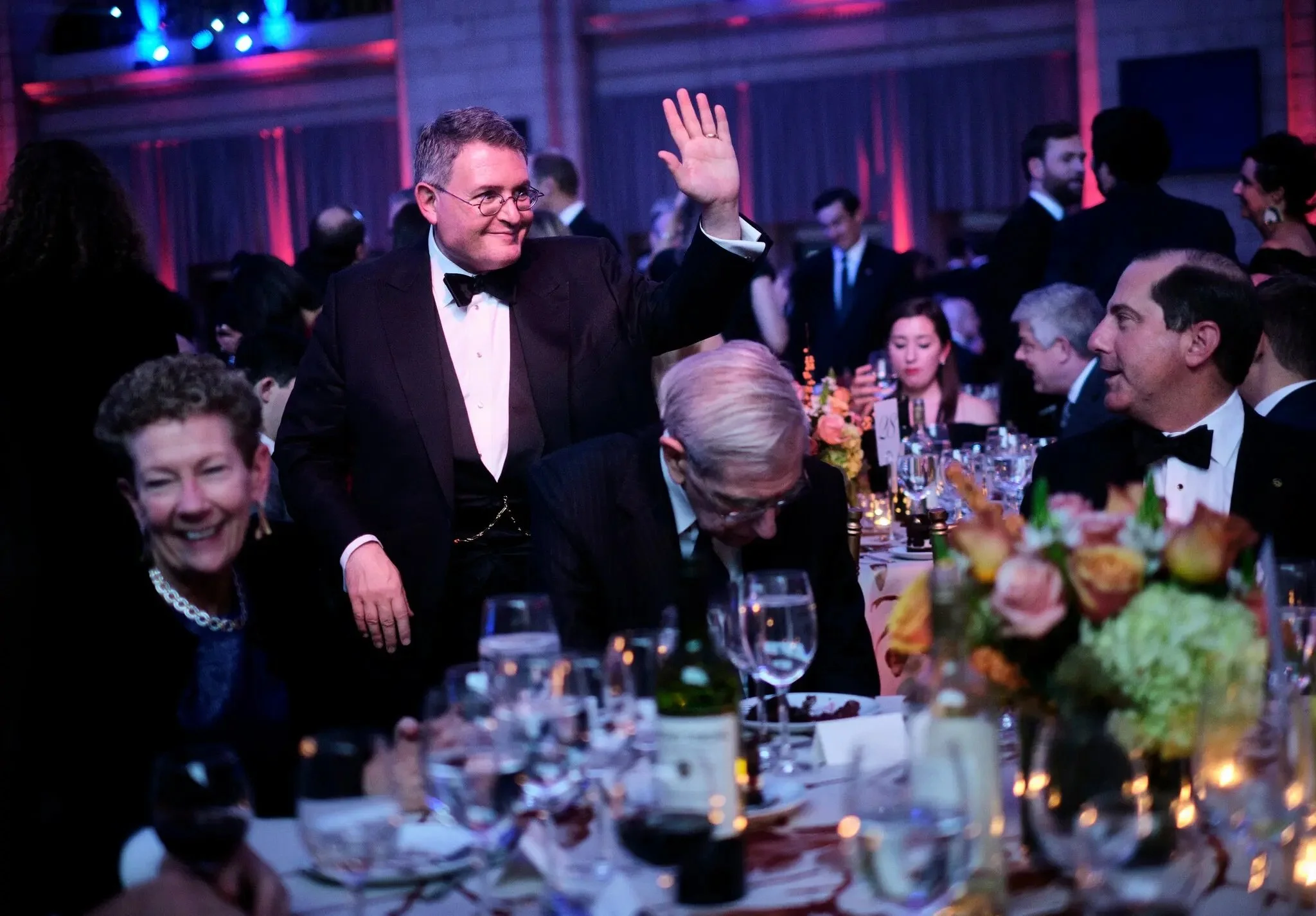
The chilling of the relationship between Mr. Trump and Leonard Leo, a leader of the Federalist Society, embodies a broader rift between Mr. Trump and conservative legal elites.Credit...T.J. Kirkpatrick for The New York Times
A Fraught Union
When Mr. Trump wrested the 2016 Republican presidential nomination from the party’s old guard, it was unclear whether social conservatives would turn out in the general election to vote for a thrice-married New Yorker who had cultivated a playboy reputation and once described himself as “very pro-choice.” But Mr. Trump won their support by essentially striking a deal with legal conservatives: He agreed to fill Supreme Court vacancies from a list of prospects compiled by a small number of movement stalwarts.
This group helping to shape the judiciary included Leonard A. Leo — arguably the most powerful figure in the conservative legal movement and a leader of the Federalist Society — and Donald F. McGahn II, Mr. Trump’s 2016 campaign general counsel and first White House counsel. With a seat already open after the death of Justice Antonin Scalia, the move worked: Exit polls showed that court-focused voters helped secure Mr. Trump’s narrow victory.
Along with the Republican leader in the Senate, Mitch McConnell of Kentucky, Mr. Leo and Mr. McGahn — and later Pat A. Cipollone, Mr. Trump’s second White House counsel — created an assembly line for turning Federalist Society-style lawyers into appeals court judges and Supreme Court justices.
But the union between Mr. Trump and the conservative legal establishment could be more fraught than it sometimes appeared. As his presidency wore on, Mr. Trump attacked and sidelined many of the lawyers around him. That included Mr. Leo.
One episode, described by a person familiar with the incident, illustrates the larger chill.