What the Five Ballot Proposal Questions Mean for New Yorkers this November
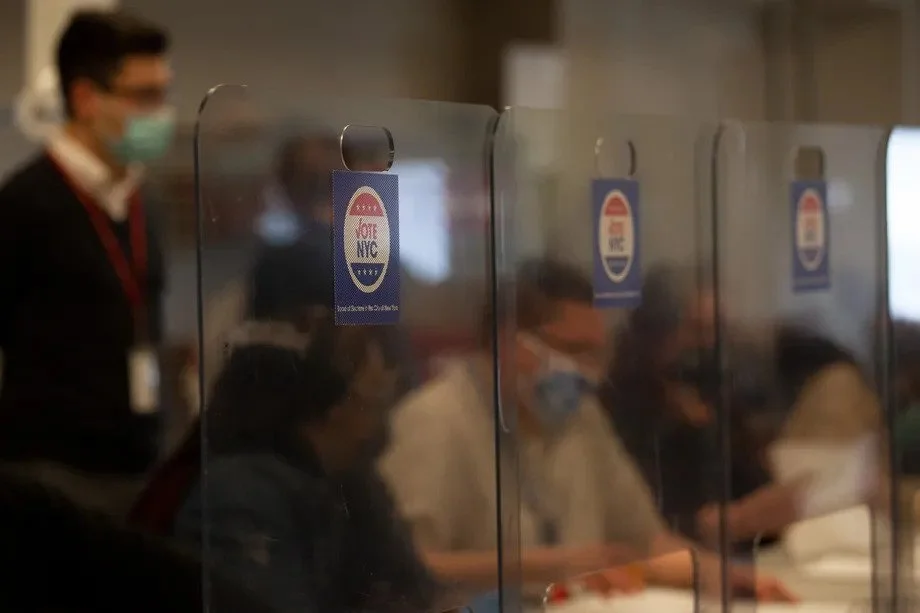
Board of Elections workers help tally ballots in Queens, March 16, 2021. Ben Fractenberg/THE CITY
by RACHEL HOLLIDAY SMITH and SAMANTHA MALDONADO, with additional reporting by Allison Dikanovic and Josefa Velasquez
[Ed.: NYPAN supports voting “Yes” on all five]
The city is not just choosing a new mayor in November. This fall, New York voters must also decide on five proposed changes to the state constitution.
Five ballot proposals are up for a vote in the general election on Nov. 2. They include questions on the future of political representation in Albany, environmental protections, easier voter registration and absentee balloting, and how New York’s civil courts function.
The full text of the five proposals are listed on the Board of Elections website and at Ballotpedia, the nonprofit political encyclopedia. But voters who aren’t political mavens may need a bit of context:
Where do these ballot proposals come from?
Unlike California, for example, where citizens can initiate a ballot proposal, New York is one of 24 states where the measures must come from legislators only, not directly from the people.
The five proposals up for consideration in November all came from Albany, where our reps voted for them in both the Assembly and the State Senate before they could arrive on your ballot, noted.
Before getting on the ballot, the proposals must be approved by both houses of the legislature, then voted on again in both chambers after the Senate and Assembly have had one election cycle. Since New York legislator’s terms are two years long, it could take between two and four years to pass a ballot measure.
Then, when it’s ready for voters, the state Board of Elections converts the often dense, legal language passed by the legislature into fairly plain text on the ballot.
“The Board of Elections is not only designing the ballot itself, but they’re writing the question that voters see,” Ryan Byrne, leader of the Ballot Measure Project at Ballotpedia.
That doesn’t necessarily mean the ballot measures are easy to understand.
Ballotpedia tallies how difficult it is to read ballot measures across the country, and this year, New York’s five proposals are at a grade level “14,” on average — meaning two years after high school “halfway through a bachelor’s degree,” Byrne said.
But that’s on the low end, relatively speaking. In Colorado, he said, state ballot measures are at a grade level “32” this year — the equivalent of a doctoral degree and then some.
How likely is it that the proposals will pass?
Statistically speaking, pretty likely. In New York, voters approved 74% of statewide ballot measures between 1985 and 2020, Ballotpedia found.
“Overwhelmingly, they get approved,” said Rachael Fauss, senior research analyst for Reinvent Albany, a government watchdog group.
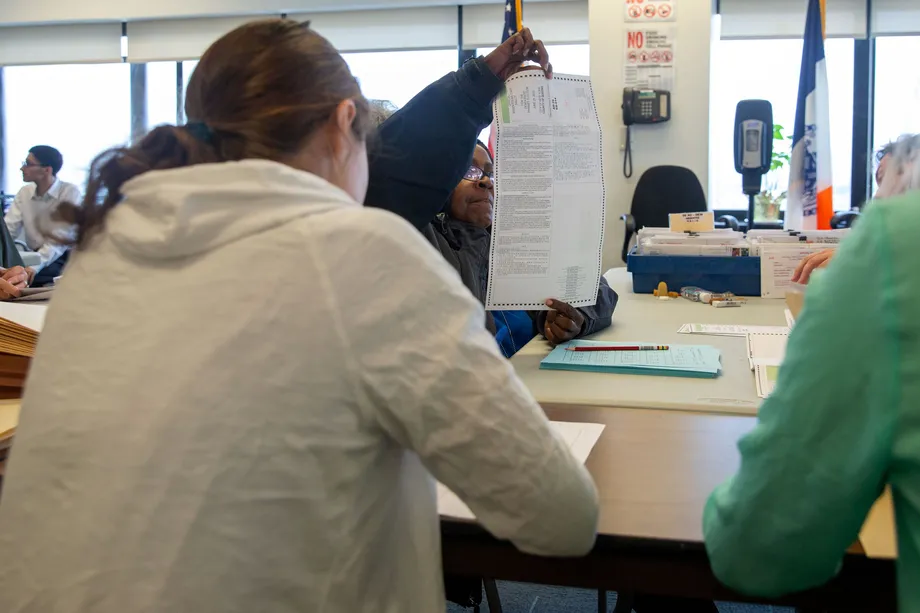
Board of Elections workers count absentee and affidavit ballots, July 3, 2019. Ben Fractenberg/THE CITY
Ballotpedia found that in odd-numbered election years, proposals in New York have been approved 65% of the time. In even-numbered years, that number goes up to 83%.
Typically, the people who vote on ballot measures are “the people who are paying attention to them, generally,” Fauss said.
Plus, it takes a bit more effort to read and fill out ballot proposals. Often, they’re on a second page.
“A lot of people leave them blank,” Fauss said.
What happens to a ballot proposal after we vote?
New York voters have the final say on ballot measures and, if they’re approved, they’ll go into effect on Jan. 1, 2022.
“The enactment process for state constitutional amendments is the voter. So, voters are essentially acting as that signature or veto,” he said.
If the measure is voted down, it’s scrapped and would have to be reintroduced and passed by the Legislature again to appear on a future ballot.